
Under Pressure

The first panel went into position exactly as we'd planned. That was the last thing that did.
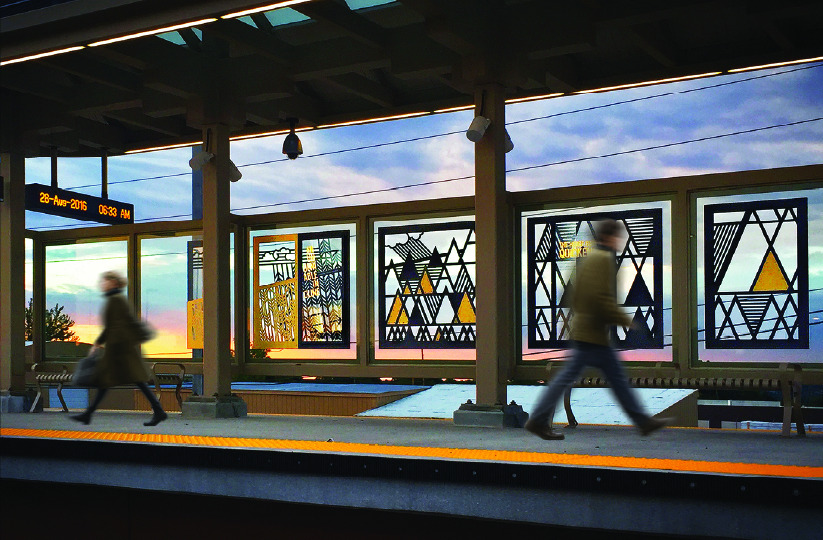
We were in Denver to install fifty-eight individual artworks at seven commuter railway stations. We'd spent nearly eighteen months designing, engineering, and fabricating them. My brother Scott and I had packed and shipped the completed panels. Now Dardi, Scott, and I were finally going to see the work where it belonged.
We were excited. We had two weeks to install everything, a few days in reserve, and the kind of confidence that comes from believing you've already survived the difficult part.
Then we discovered we couldn't properly attach the first panel to the glass.
Suddenly, the question wasn't how long the installation would take, but whether we could accomplish it at all.
But I should explain how we got there.
I'd worked at Ditroen, a design studio run by Dardi Troen, for about seven years. Dardi has an extraordinary ability to recognize the underlying story in a place, object, or idea and make it visible. Together we designed environments and installations that told those stories. We were good at it, and we enjoyed the work.
Denver's Regional Transportation District was developing its G Line commuter railway, and we won a commission to create artwork for the glass windscreens at seven stations. Dardi and writer Leslee Dillon developed a narrative exploring gold and its influence on the region. Dardi designed the compositions, while I developed the construction system.
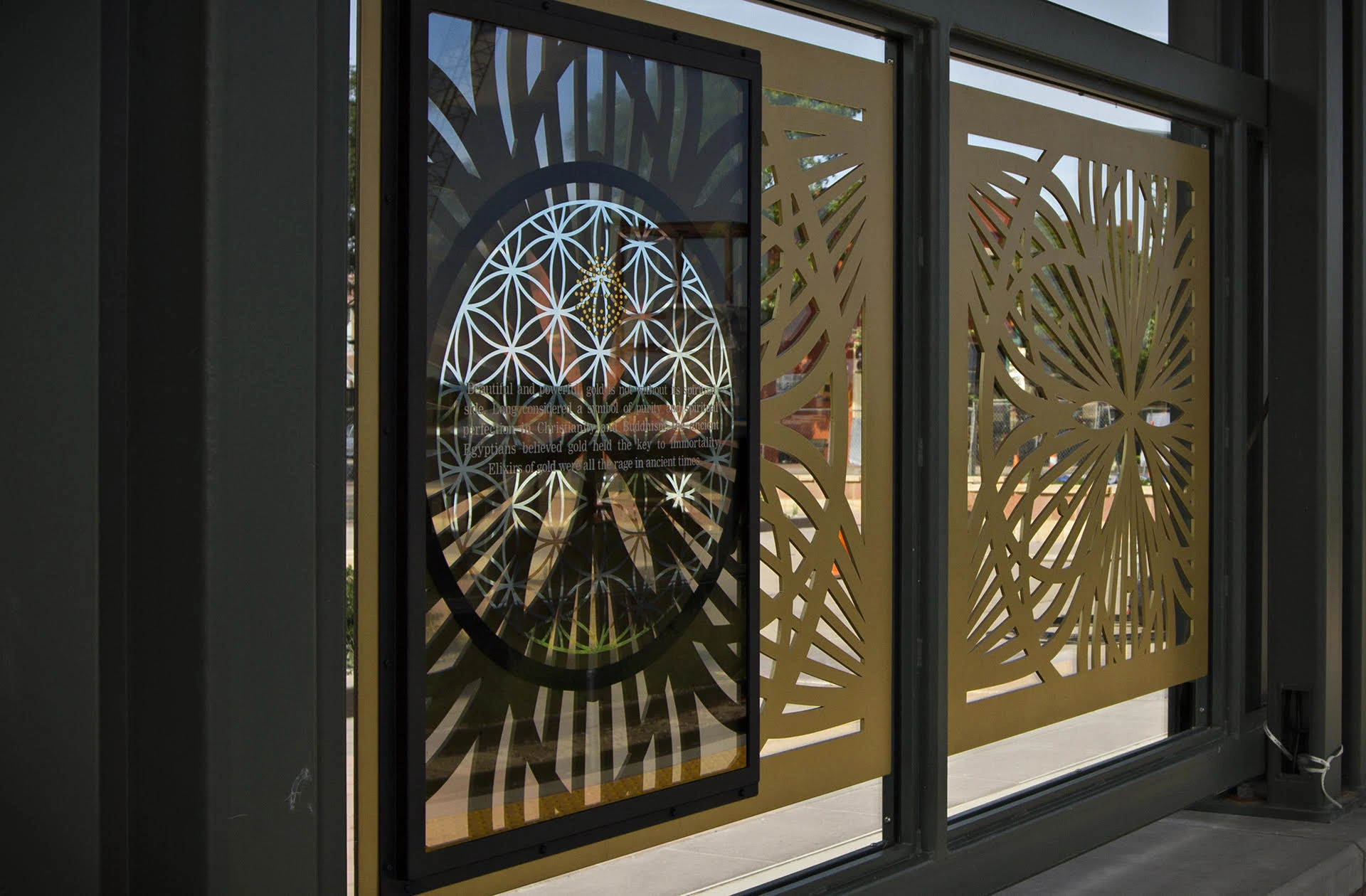
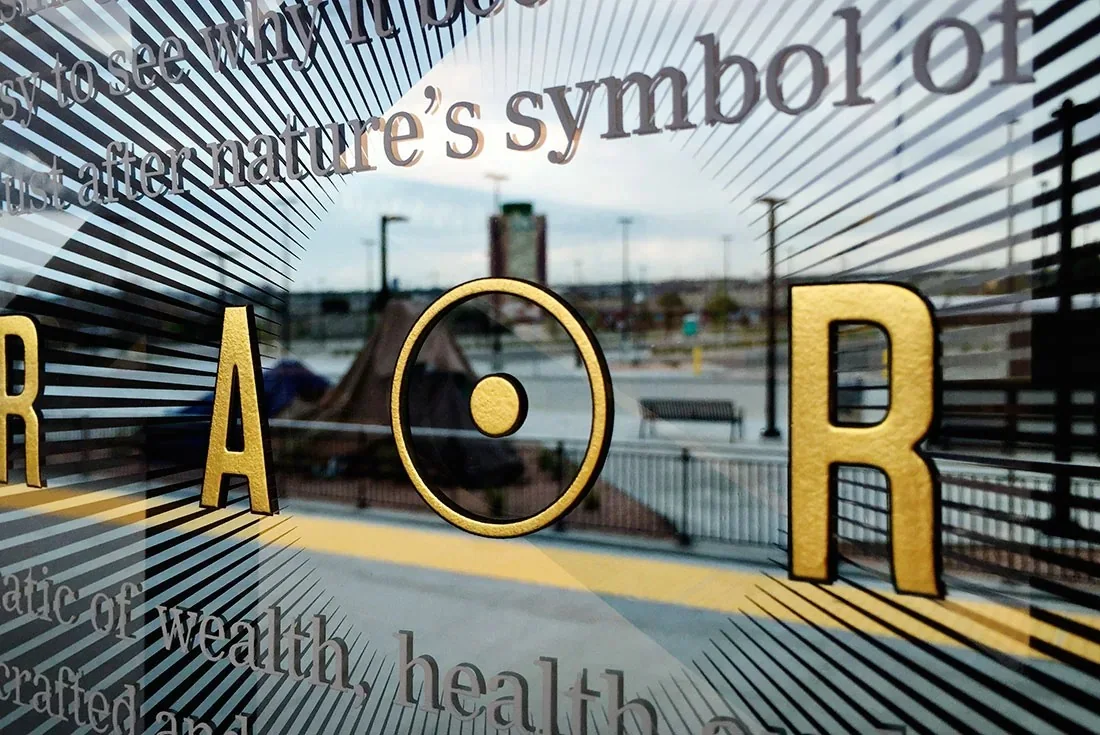
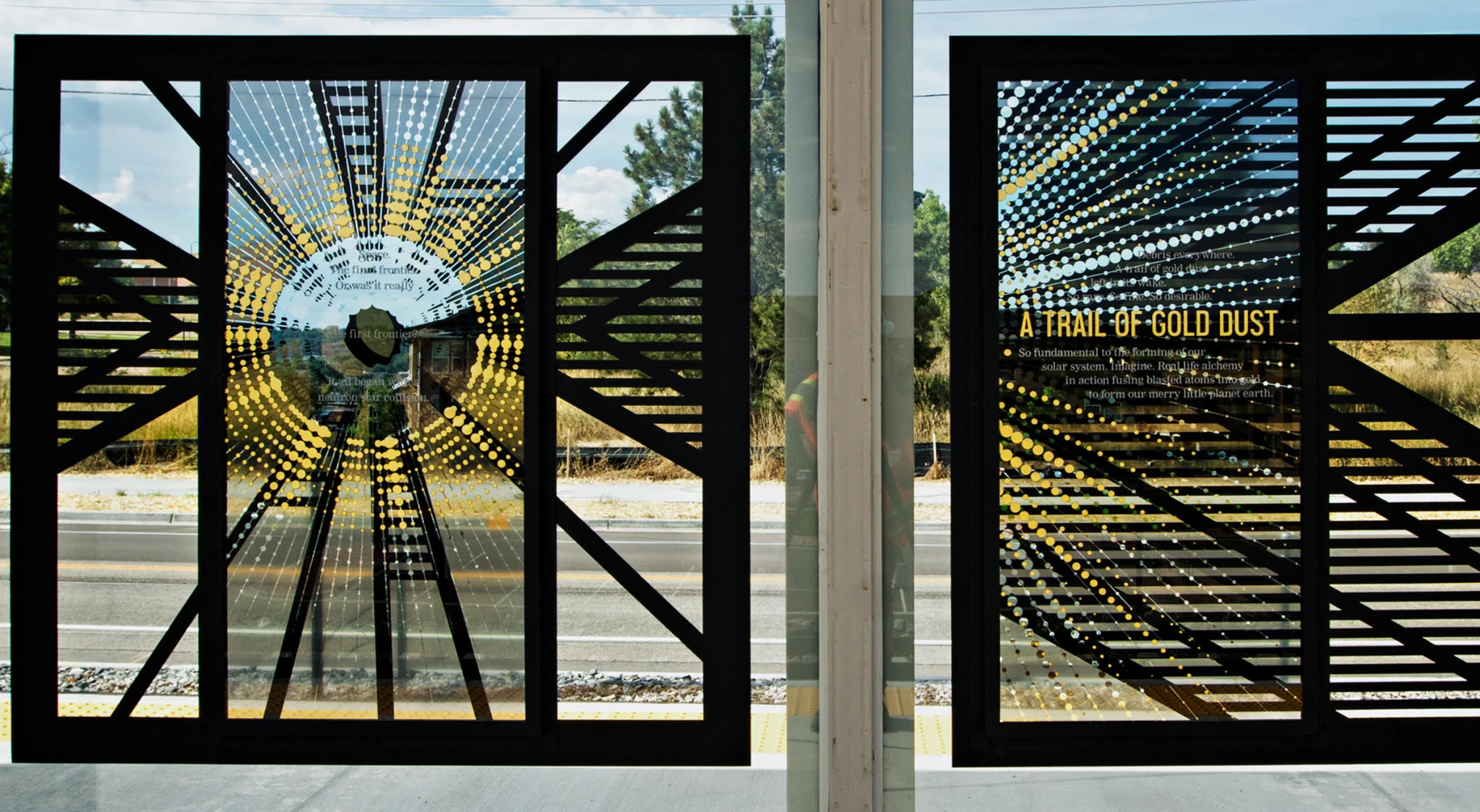
There were fifty-eight panels, all different.
Each artwork was built around a laser-cut aluminum chassis, about 4' square, with layers of metal, glass, framing, and fasteners. It took months to produce the drawings, fabricate the parts, and assemble everything.
There remained the not so small matter of attaching them to the station windscreens.
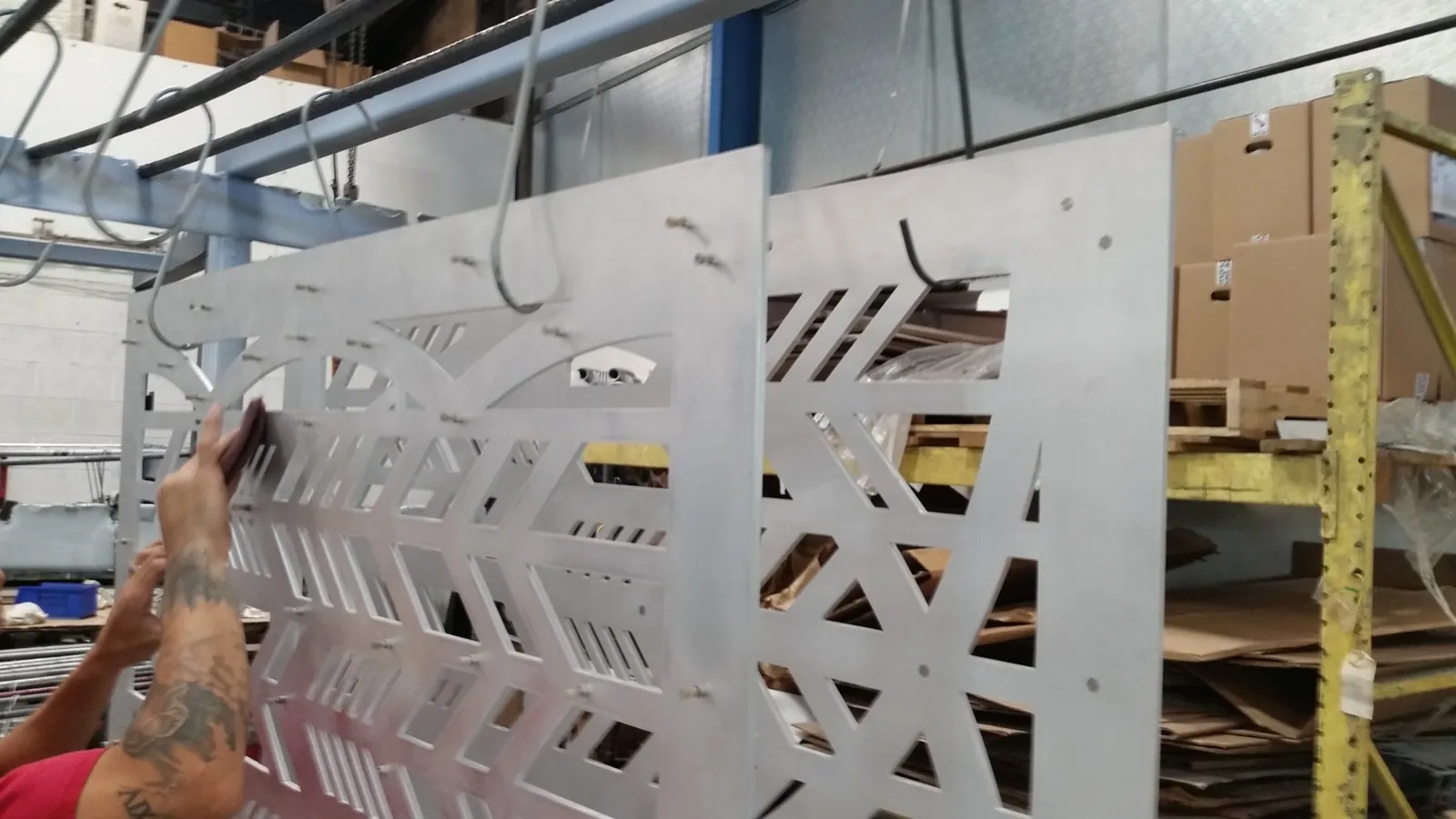
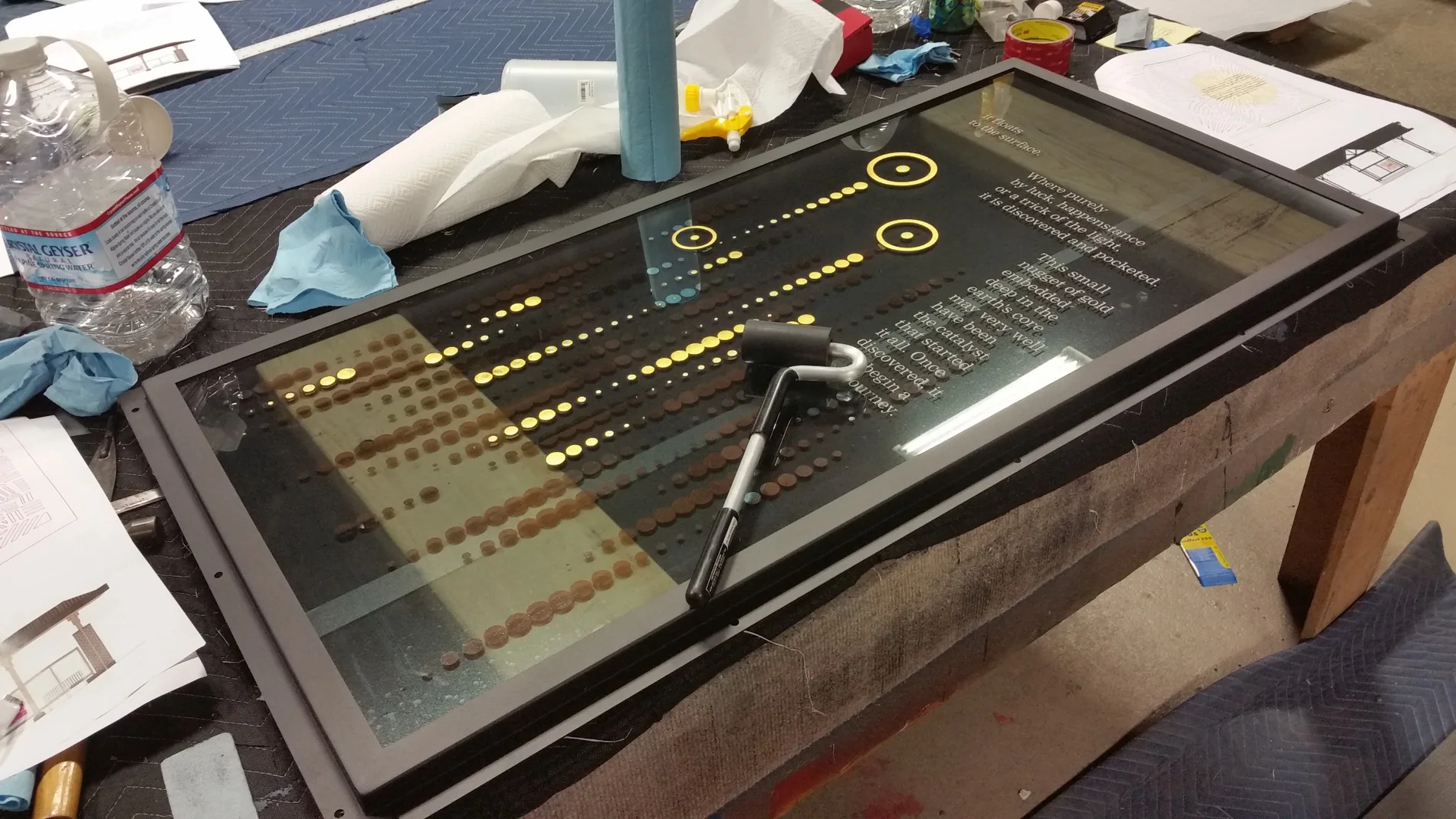
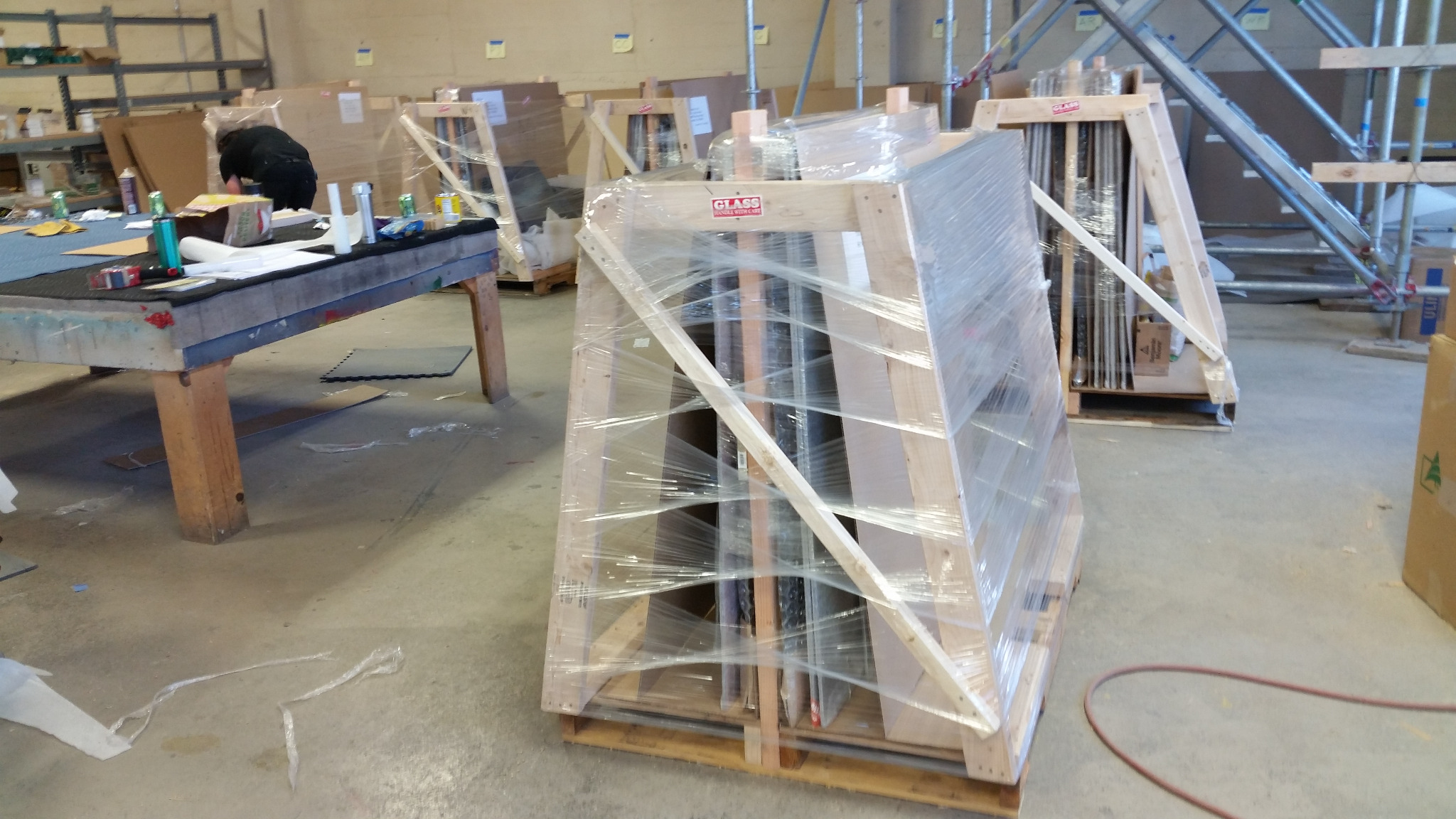
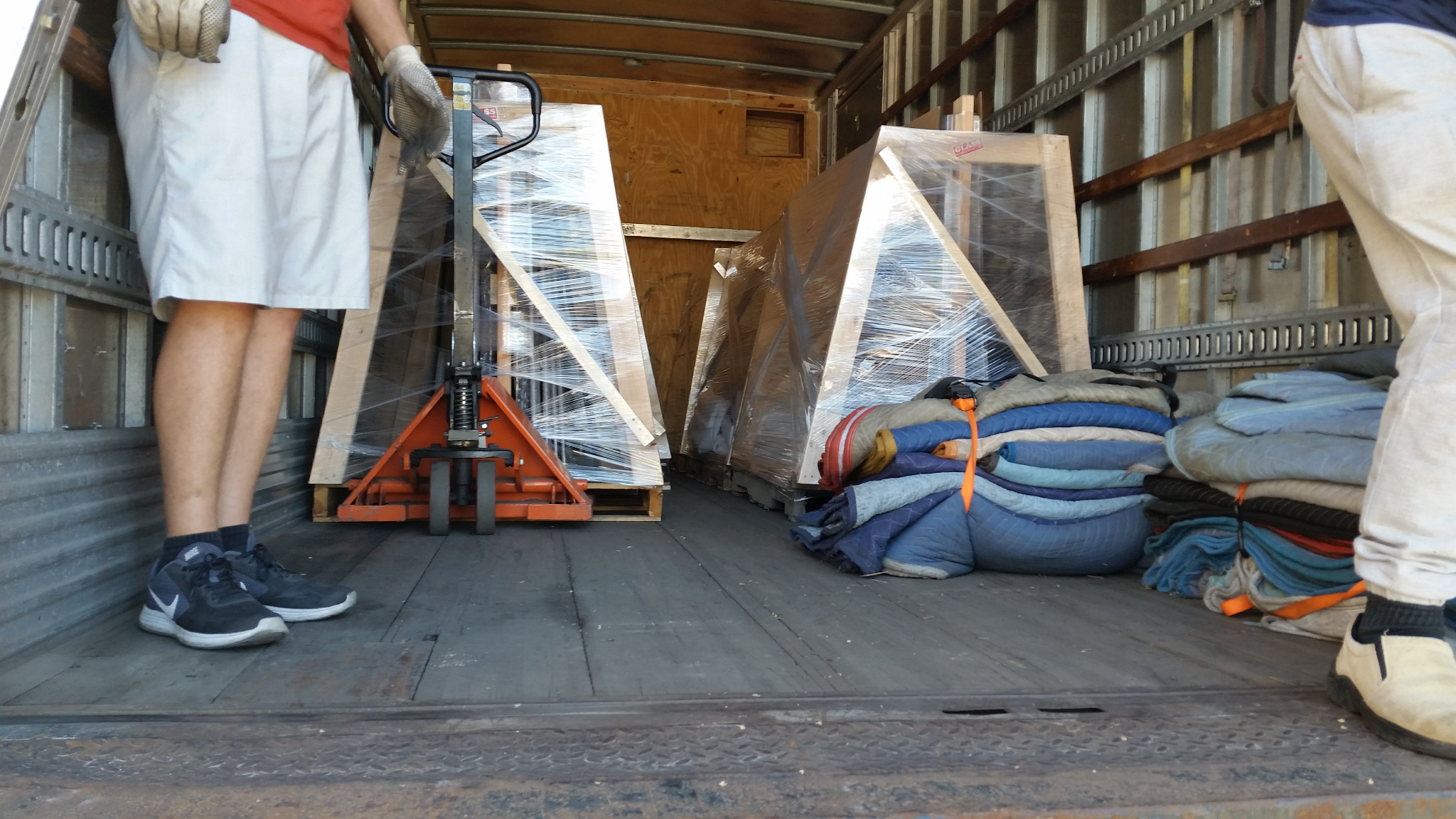
The panels were heavy, and Denver's climate meant the attachment had to be both strong and flexible. With help from 3M's technical consultation service, I selected one of their Very High Bond adhesive tapes. I lost sleep worrying about whether the panels would stay attached.
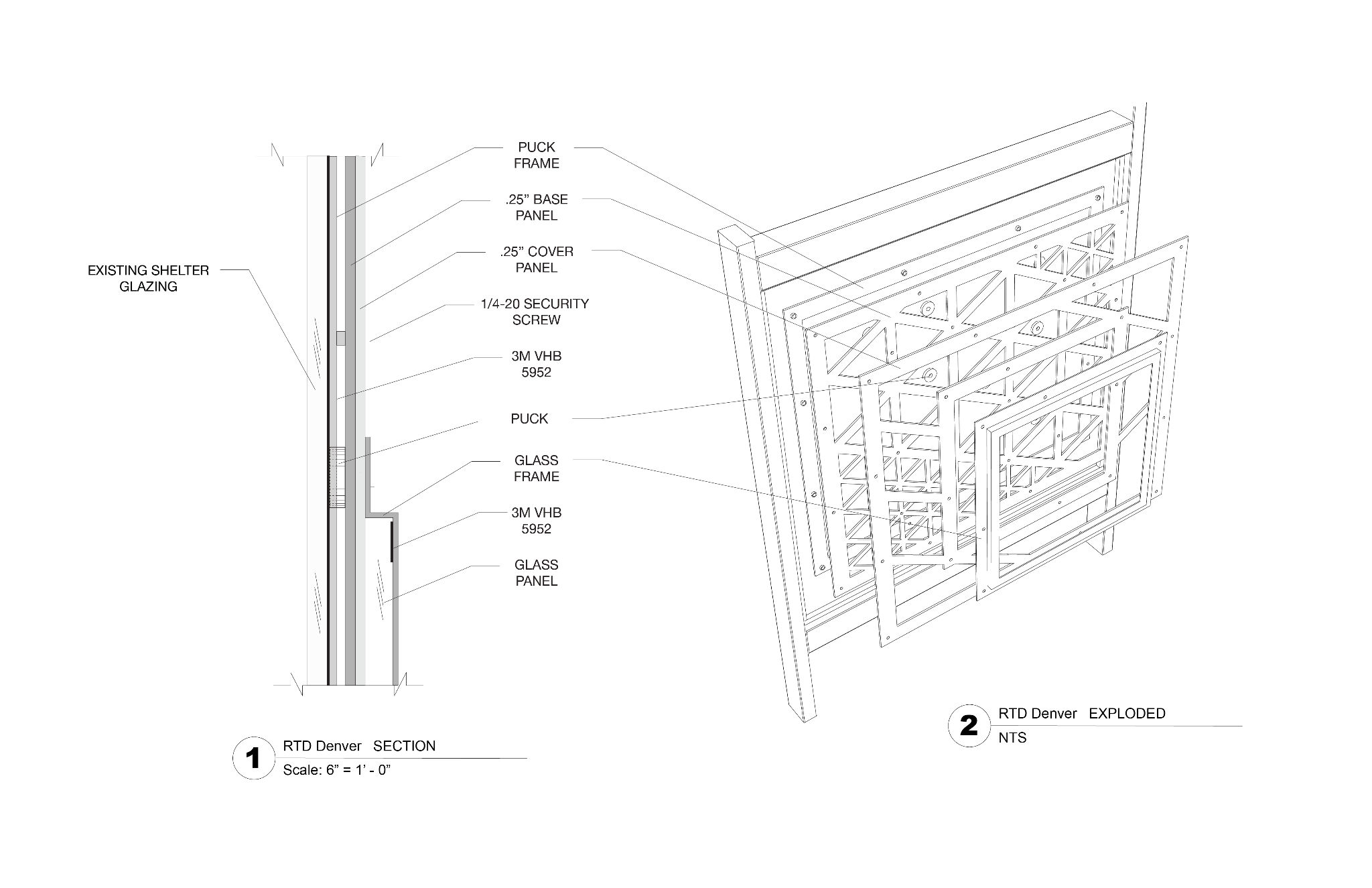
What I hadn't sufficiently considered was how difficult it might be to get them attached in the first place.
Which brings us back to that first panel.
We'd devised spacers to position each assembly accurately. The panel could rest against the lower spacer and be tipped into place. Hand rollers would then apply the pressure needed to bond the adhesive to the glass.
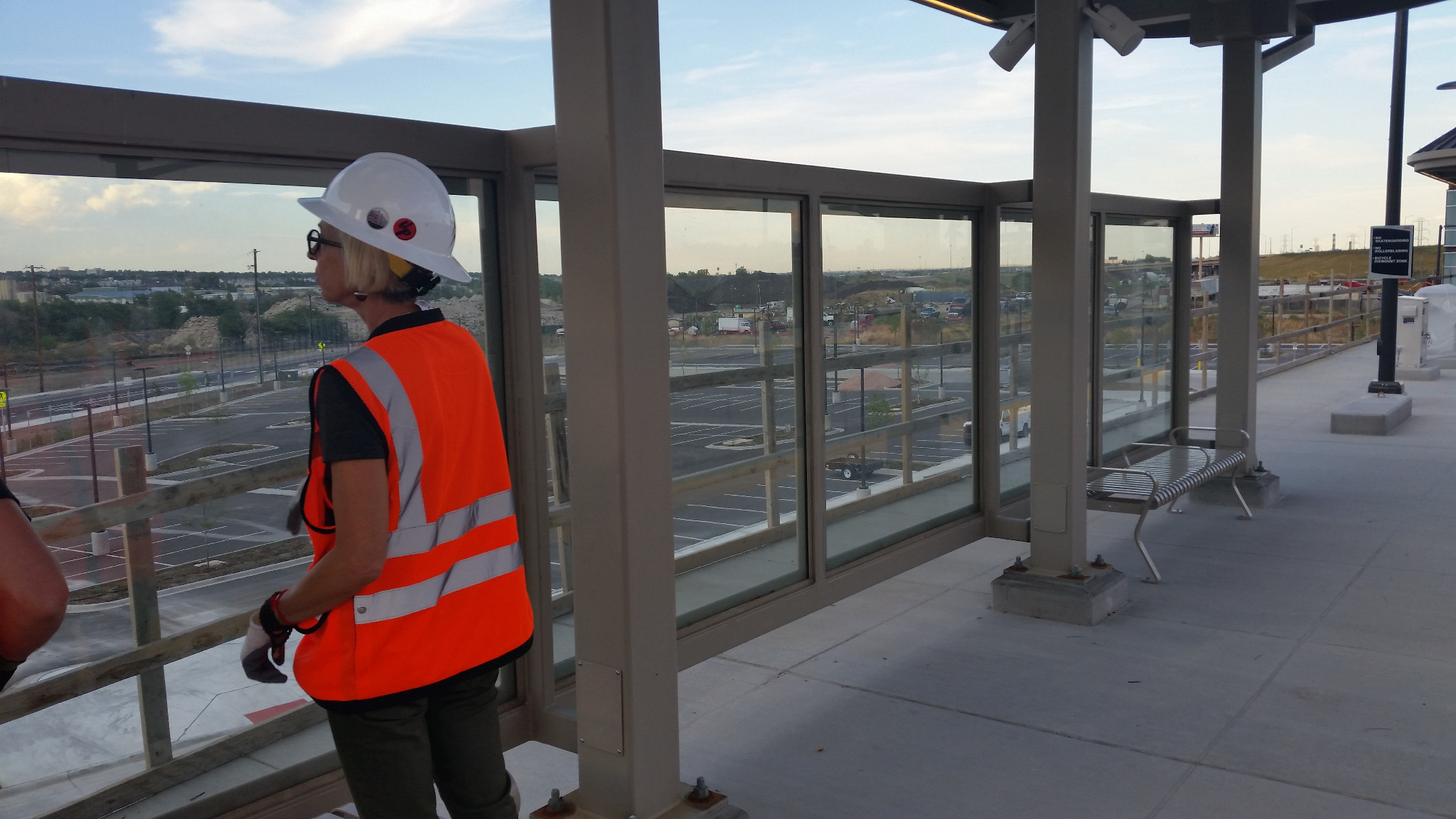
The positioning worked exactly as intended.
The pressure did not.
Enormous air bubbles remained trapped between the adhesive and the glass. We rolled harder, tried different approaches, and accomplished precisely nothing.
We knew what was wrong. We just couldn't make it stop being wrong.
We cleaned up and trudged back to our rented house.
To Dardi's credit, there were no recriminations. I was carrying the additional discomfort of having designed the installation method that had just failed.
What we needed was pressure. Considerably more of it, applied evenly without shattering the windscreen. Eventually, I worked out a possible solution: four lengths of structural steel angle, connected at their ends, with large threaded bolts that could apply pressure from both sides of the glass.
Essentially, an enormous clamp. Unfortunately, we didn't have one. Fortunately, Dardi had a friend in Denver who was a sculptor and metalworker. He took my drawings and fabricated the contraption over the following day.
We called it Clampasaurus.
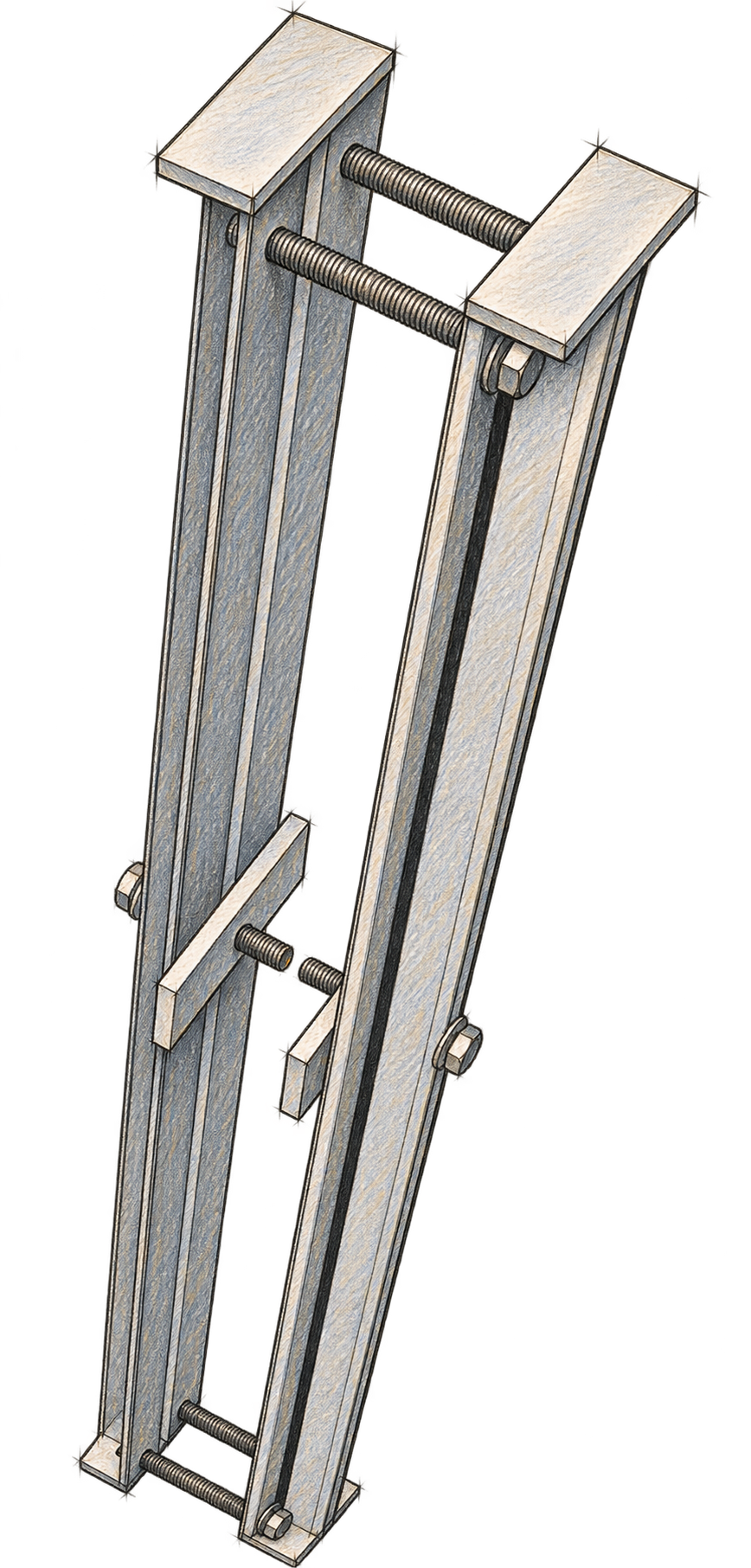
Armed with our newly minted apparatus, we returned to the station.
We positioned it around the windscreen and began tightening the bolts. There was, of course, the possibility that we'd shatter the glass instead. Having failed to install the artwork, breaking the station itself would have been an escalation we were particularly anxious to avoid.
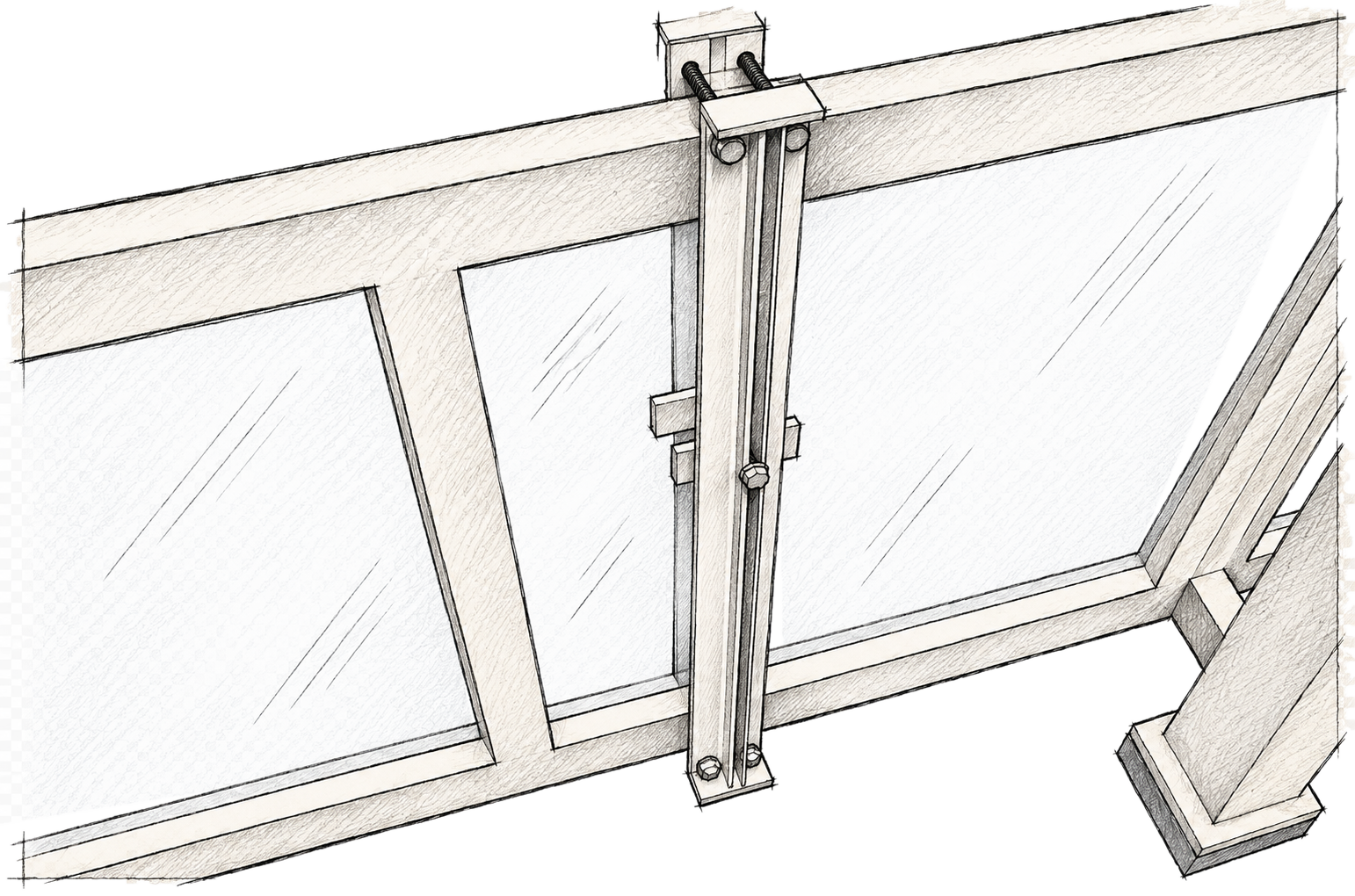
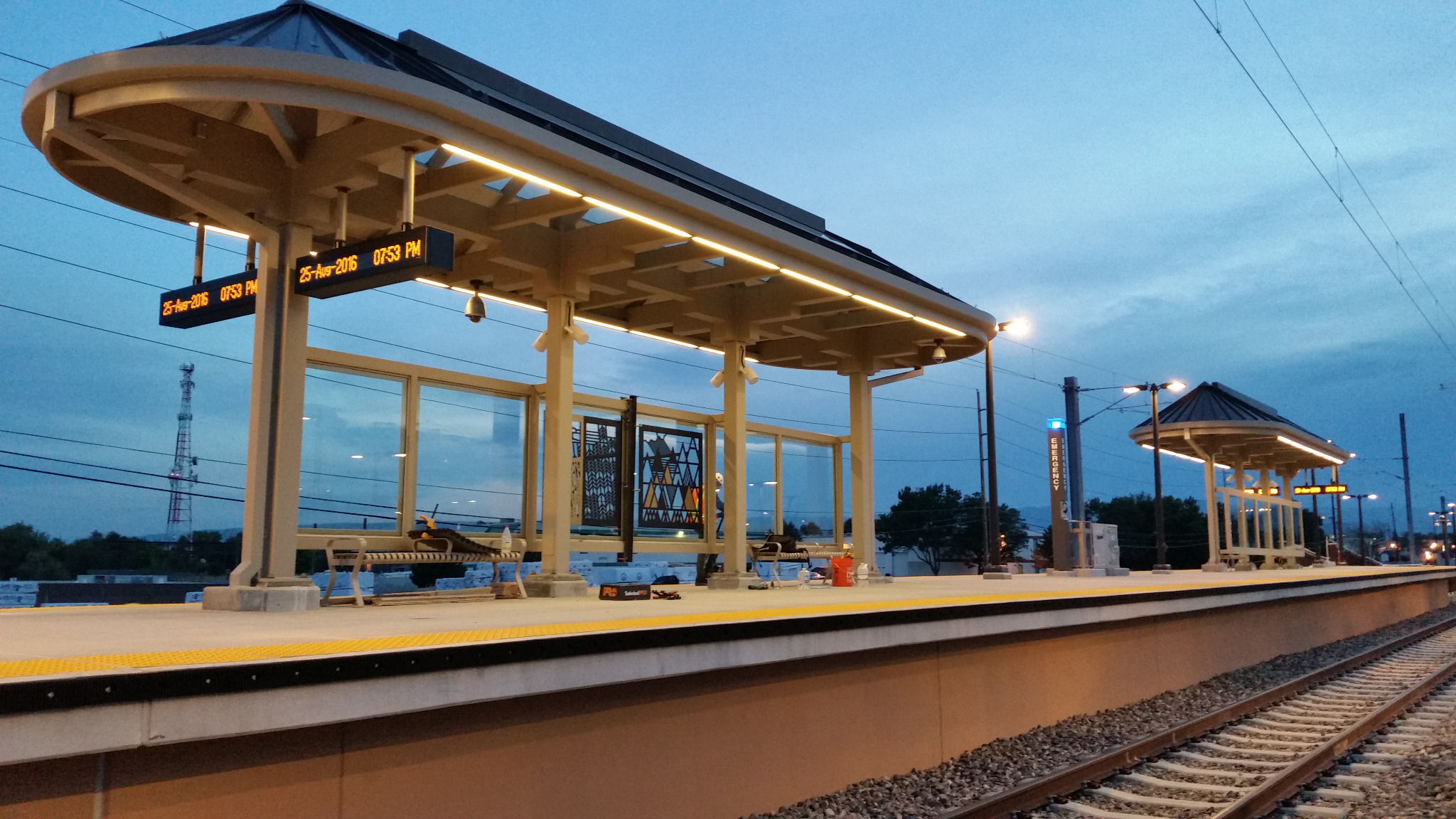
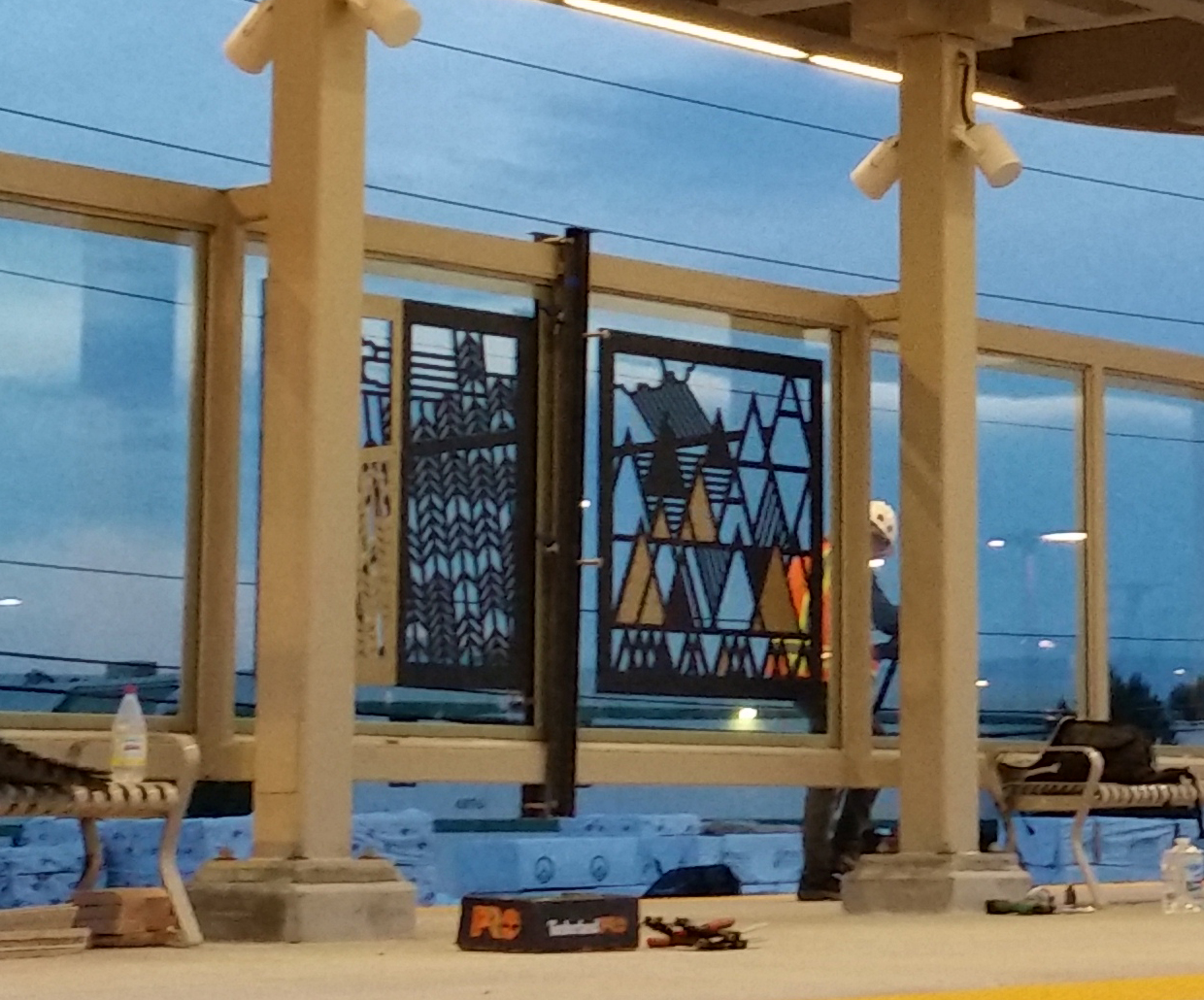
We tightened the bolts carefully, watching the panel.
The bubbles began to disappear.
Then they were gone.
Eighteen months of careful planning, and the thing that saved us was a contraption with a ridiculous name. Fifty-seven panels to go...
Project credits
Creative direction and visual compositions: Dardinelle (Dardi) Troen / Ditroën. Narrative: Dardinelle Troen and Leslee Dillon. Construction system, assembly engineering, component drawings, vendor coordination: Terry Tebeau.